

There’s no doubt about it, an EHR can do incredible things for your patients.
It captures every detail, keeps records secure, and makes care coordination faster and more accurate than ever.
But patient experience doesn’t stop at the chart.
Today’s patients expect more: timely reminders, proactive follow-ups, and real-time answers to their questions. They also want the flexibility to connect by phone, chat, text, or email, depending on what works best in the moment.
An EHR is the foundation. Omnichannel patient support is the bridge that takes you from information to interaction and from records to relationships.

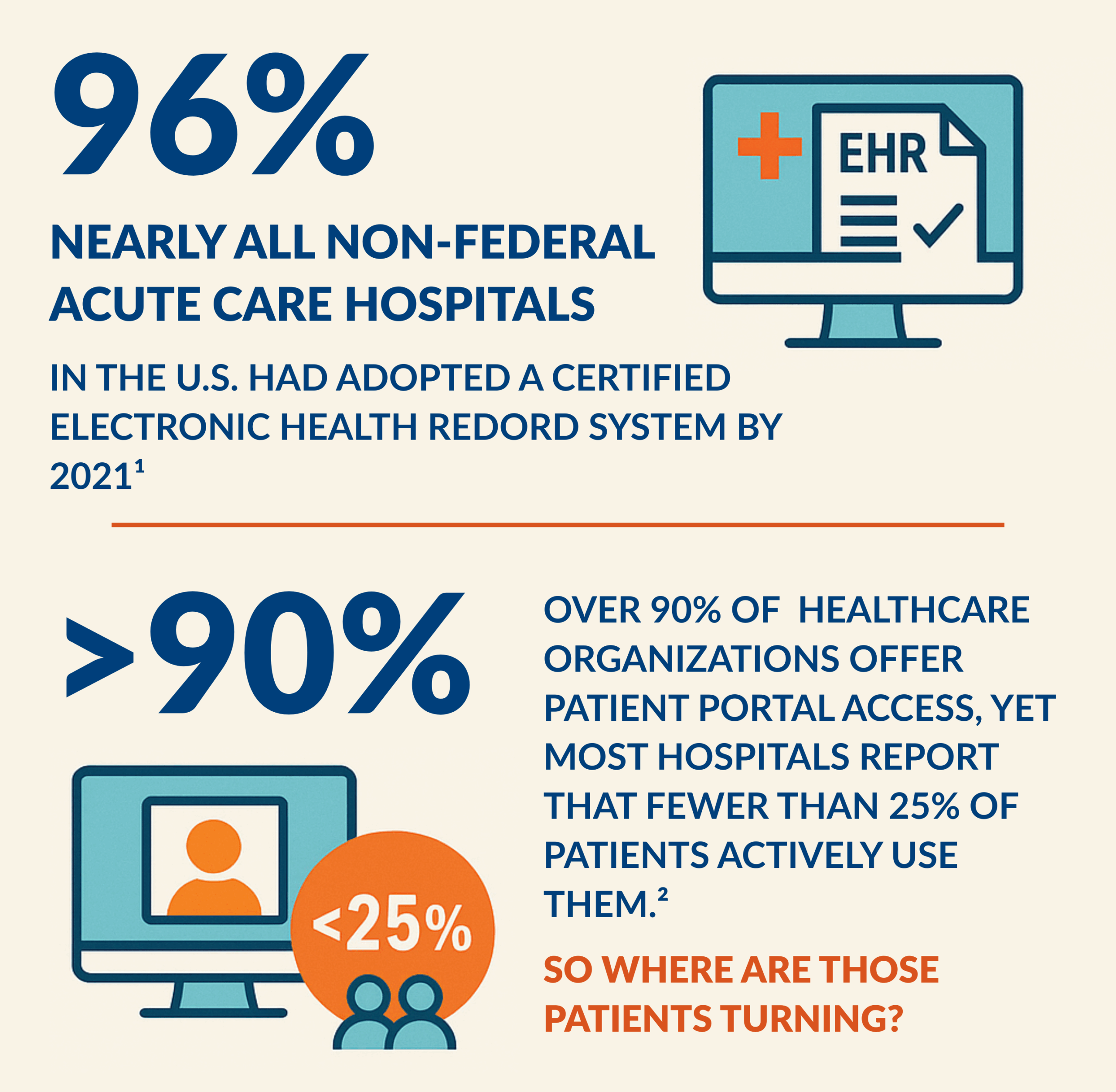
¹https://www.healthit.gov/data/quickstats/national-trends-hospital-and-physician-adoption-electronic-health-records
²https://www.pointb.com/Insights/Articles/2023/09/Making-Omnichannel-Work-for-Healthcare
EHRs Excel at Managing Patient Data, Engagement Needs a Broader Toolkit
EHRs remain the gold standard for clinical data management. Their core strengths include:
- Ensuring regulatory compliance and secure data storage
- Supporting interoperability between care teams and facilities
- Maintaining accurate and up-to-date patient records
However, patients now expect healthcare to meet them where they’re at, whether that’s on the phone, via secure chat, or through a text reminder. Omnichannel solutions bring strengths such as:
- Accessibility across multiple platforms and devices
- Immediacy in addressing patient needs and concerns
- Personalization based on patient preferences and history
Together, these capabilities form a more connected and responsive care ecosystem that builds trust and improves outcomes.
The Role of Omnichannel Support in a Healthcare Setting
In healthcare, omnichannel support means offering multiple, integrated ways for patients to interact with their care teams. Common channels include:
- Voice calls for appointment booking, clinical follow-up, or urgent questions
- Secure chat for billing inquiries or quick clarifications
- Email for detailed instructions or post-visit summaries
- Text or SMS for appointment reminders or medication prompts
- Patient portals for ongoing condition management and document access
When these touchpoints connect securely with the EHR, every interaction becomes part of the patient’s official record.
Why Integration, Not Replacement, Is the Key to Success
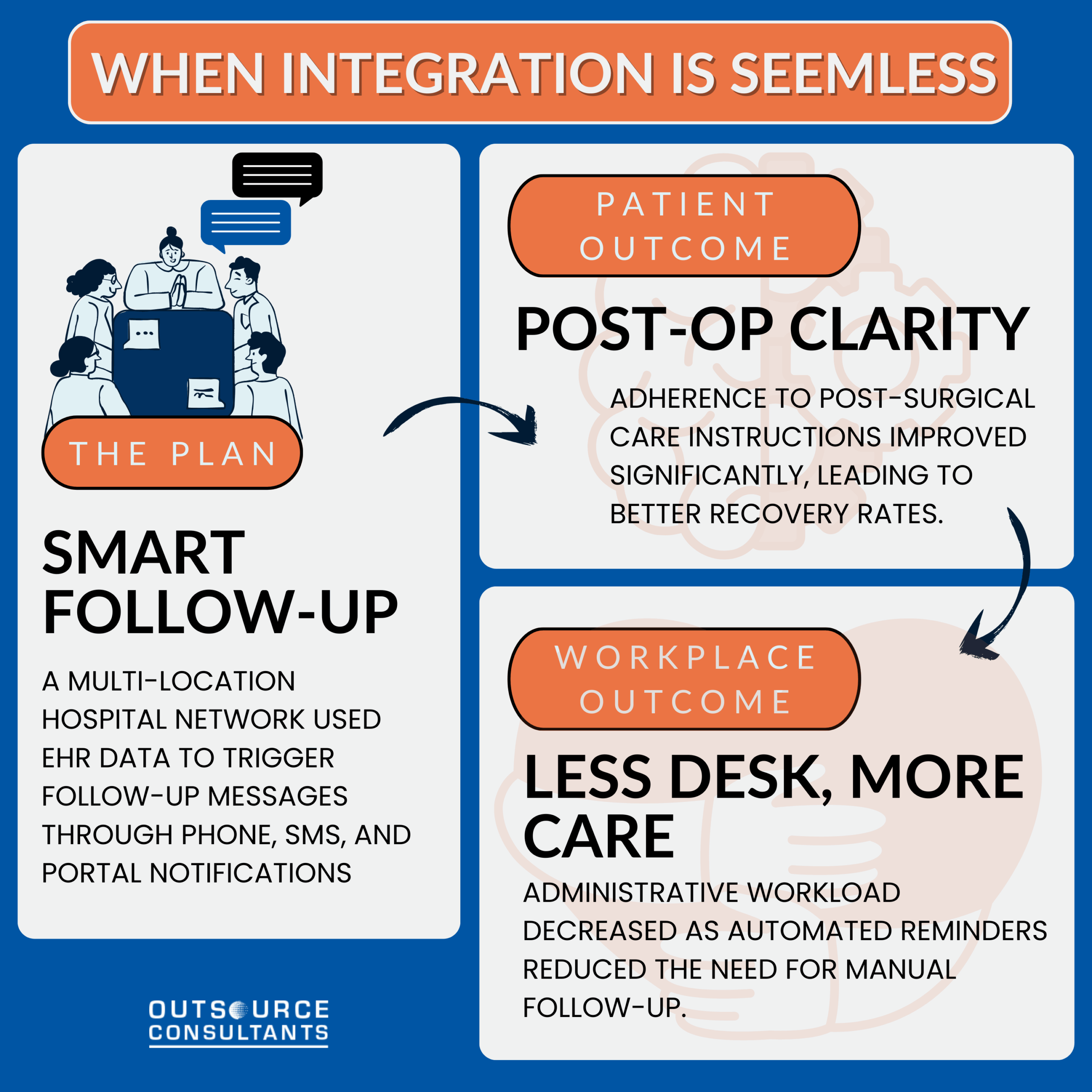
Your EHR is not replaced by omnichannel tools. Instead, the EHR remains the central hub for patient data while omnichannel support extends its reach.
The most effective healthcare BPO partners integrate directly with your EHR, pulling accurate patient information to personalize outreach and feeding back communication records for a complete patient profile.
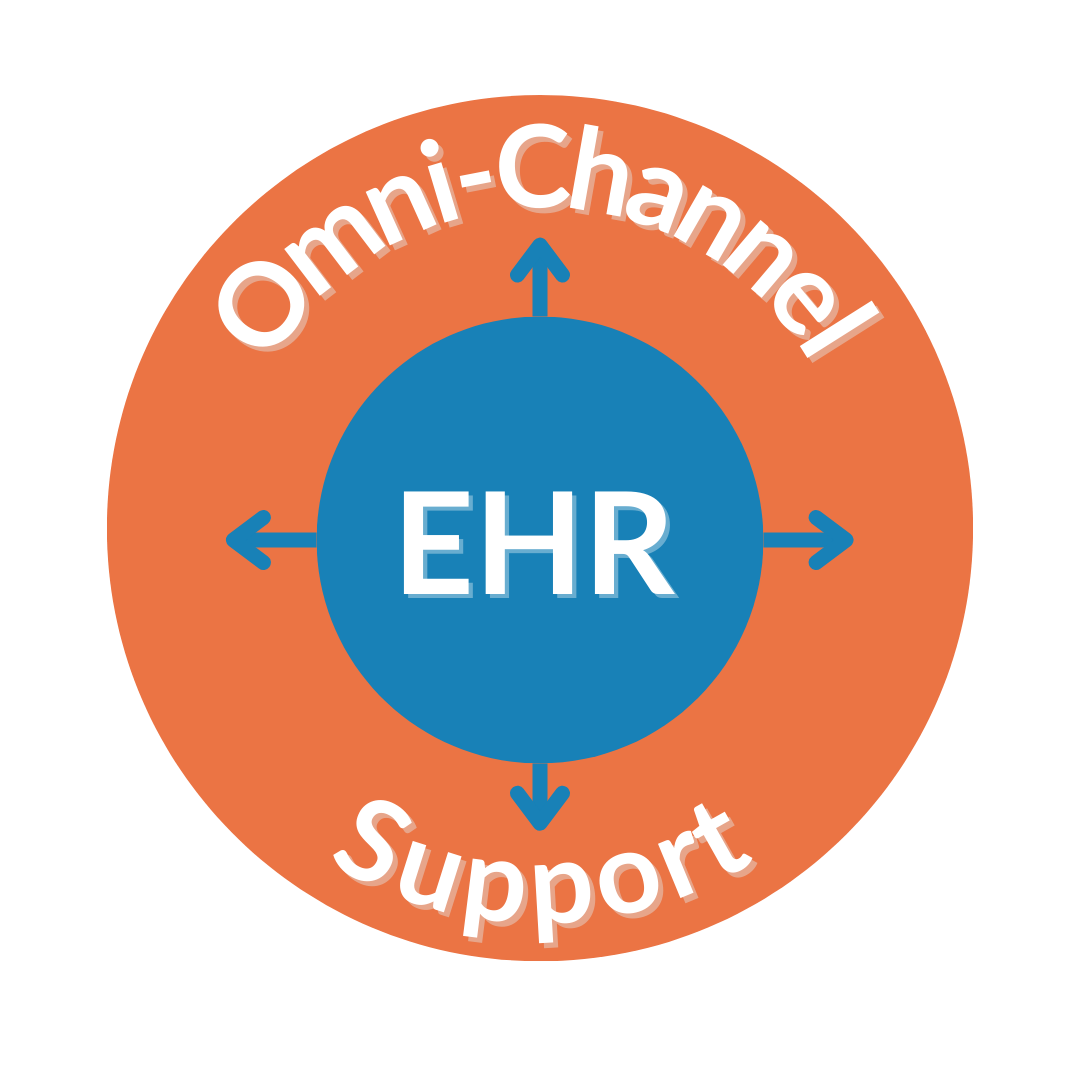
Think of the EHR as the core and omnichannel communication as the surrounding “halo” that keeps patients informed, engaged, and connected between visits. Experienced partners act as orchestrators, aligning human talent and AI-driven workflows to enhance EHR data integrity and streamline communication.
AI as an Ally to Your EHR and Care Teams
Artificial Intelligence can make patient engagement more proactive and efficient when working alongside your EHR. Some common AI-enabled, EHR-connected use cases include:
- Triage alerts that identify urgent patient messages for immediate response
- Predictive outreach to remind patients of preventive care or follow-up appointments
- Sentiment analysis to detect dissatisfaction or confusion in patient communications
This approach reflects Outsource Consultants’ belief that AI is best used to enhance, not replace, the human touch in healthcare. Technology handles repetitive or data-intensive tasks so care teams can focus on complex, high-value interactions.
Schedule a CX Strategy Call to explore how healthcare-specialized BPOs can unlock your EHR’s full engagement potential.